
🐾 Pet care service

Diagnostics & Blood Testing

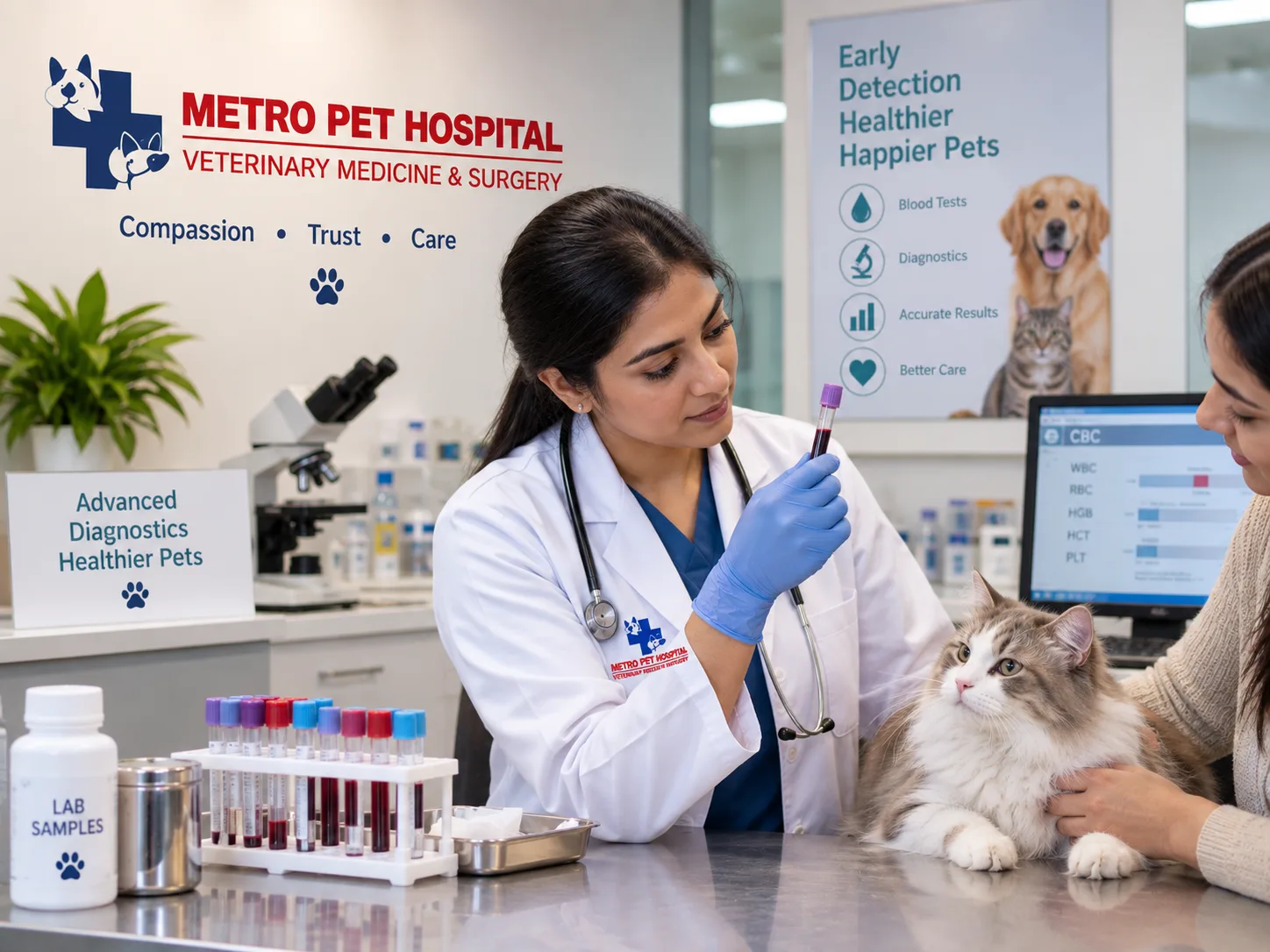
Accurate diagnostics can help veterinarians identify health concerns and make informed treatment decisions. Metro Pet Hospital provides diagnostic and blood-testing support for dogs and cats based on their symptoms, medical history and clinical needs.

service 3

Diagnostic testing plays an important role in understanding your pet's health. When a physical examination alone does not provide enough information, appropriate diagnostic tests can help veterinarians investigate symptoms, evaluate organ function and support clinical decision-making.

At Metro Pet Hospital, diagnostic and blood-testing services may be recommended based on your pet's age, symptoms, medical history and overall condition. Our veterinary team reviews the clinical findings and selects tests that are appropriate for your pet's individual needs.

Diagnostic & Blood Testing Support

Blood testing can provide valuable information about different aspects of a pet's health, including blood cell levels and indicators of organ function. Diagnostic investigations may also be recommended when monitoring an existing condition, preparing for a procedure or assessing changes in your pet's health.

Test results are interpreted alongside your pet's examination, medical history and other clinical findings to help guide the next steps in care.

Conditions & concerns covered

Unexplained changes in appetite or energy Persistent vomiting or diarrhoea Weight loss or weight changes Fever or signs of infection Anaemia and blood-related concerns Possible organ-function abnormalities Changes in drinking or urination Pre-operative health assessment Monitoring of ongoing health conditions Senior-pet health screening General wellness investigations

When to contact a veterinarian

When your pet develops persistent or unexplained symptoms When your veterinarian recommends diagnostic testing When blood work is required to investigate a health concern Before certain surgical or medical procedures When monitoring an existing medical condition When your pet shows unexplained weight loss or reduced appetite When there are changes in drinking or urination When your senior pet requires a routine health assessment When previous test results need follow-up or monitoring

What to expect

  1. Step 1

    Review your pet's symptoms and medical history

  2. Step 2

    Perform a veterinary examination

  3. Step 3

    Determine which diagnostic tests may be appropriate

  4. Step 4

    Collect the required sample safely

  5. Step 5

    Process or arrange the appropriate diagnostic testing

  6. Step 6

    Review and interpret the test results

  7. Step 7

    Discuss the findings and recommended next steps

  8. Step 8

    Arrange follow-up testing when clinically appropriate

Facilities

  • Veterinary examination facilities
  • Blood sample collection
  • Diagnostic testing support
  • Clinical monitoring
  • Laboratory testing support
  • Pre-operative diagnostic assessment
  • Follow-up health monitoring

Benefits

  • Supports informed veterinary decision-making
  • Helps investigate unexplained symptoms
  • Provides useful information about your pet's health
  • Can help identify potential health concerns
  • Supports monitoring of ongoing conditions
  • Helps assess health before certain procedures
  • Provides useful information for senior-pet wellness
  • Supports appropriate treatment and follow-up planning

Safety information

Diagnostic tests are recommended based on your pet's individual clinical needs. A veterinarian should determine which tests are appropriate after considering your pet's symptoms, medical history and examination findings. Blood sample collection may cause brief discomfort or minor bruising at the collection site. Test results should always be interpreted by a qualified veterinarian in combination with the clinical examination and medical history. A single test result may not provide a complete picture of your pet's health. Follow your veterinarian's instructions regarding preparation for testing, including any fasting requirements when applicable.

Where this service is available

Metro Pet Hospital - Sector 23, Gurugram

SCO-18, HUDA Market, Sector 23, Sector 23, Gurugram

Branch details →

Metro Pet Hospital - Sector 99, Gurugram

Shop G-190, Ocus Medley, Sector 99, Gurugram

Branch details →

Metro Pet Hospital - DLF Phase IV, Gurugram

D-02, Supermart-II, DLF Phase-IV, Gurugram

Branch details →

Questions about diagnostics & blood testing

Why might my pet need a blood test?
A veterinarian may recommend blood testing to investigate symptoms, assess overall health, evaluate certain organ functions, monitor an existing condition or help determine whether your pet is suitable for a procedure.
What can blood tests tell us about a pet's health?
Depending on the tests performed, blood work can provide information about blood cells and indicators of organ function and may help veterinarians investigate possible health problems. Results are interpreted together with the pet's examination and medical history.
Does my pet need to fast before a blood test?
Some blood tests may require your pet to fast beforehand, while others may not. Follow the preparation instructions provided by your veterinarian for the specific test being performed.
How long does it take to get diagnostic test results?
The turnaround time depends on the type of test and whether it is processed at the hospital or through an external laboratory. Your veterinary team can provide the expected timeframe for your pet's specific tests.

Book Diagnostics & Blood Testing

Request an appointment and our team will contact you to confirm a time.

Request a Consultation