
🐾 Pet care service

Senior Pet Care

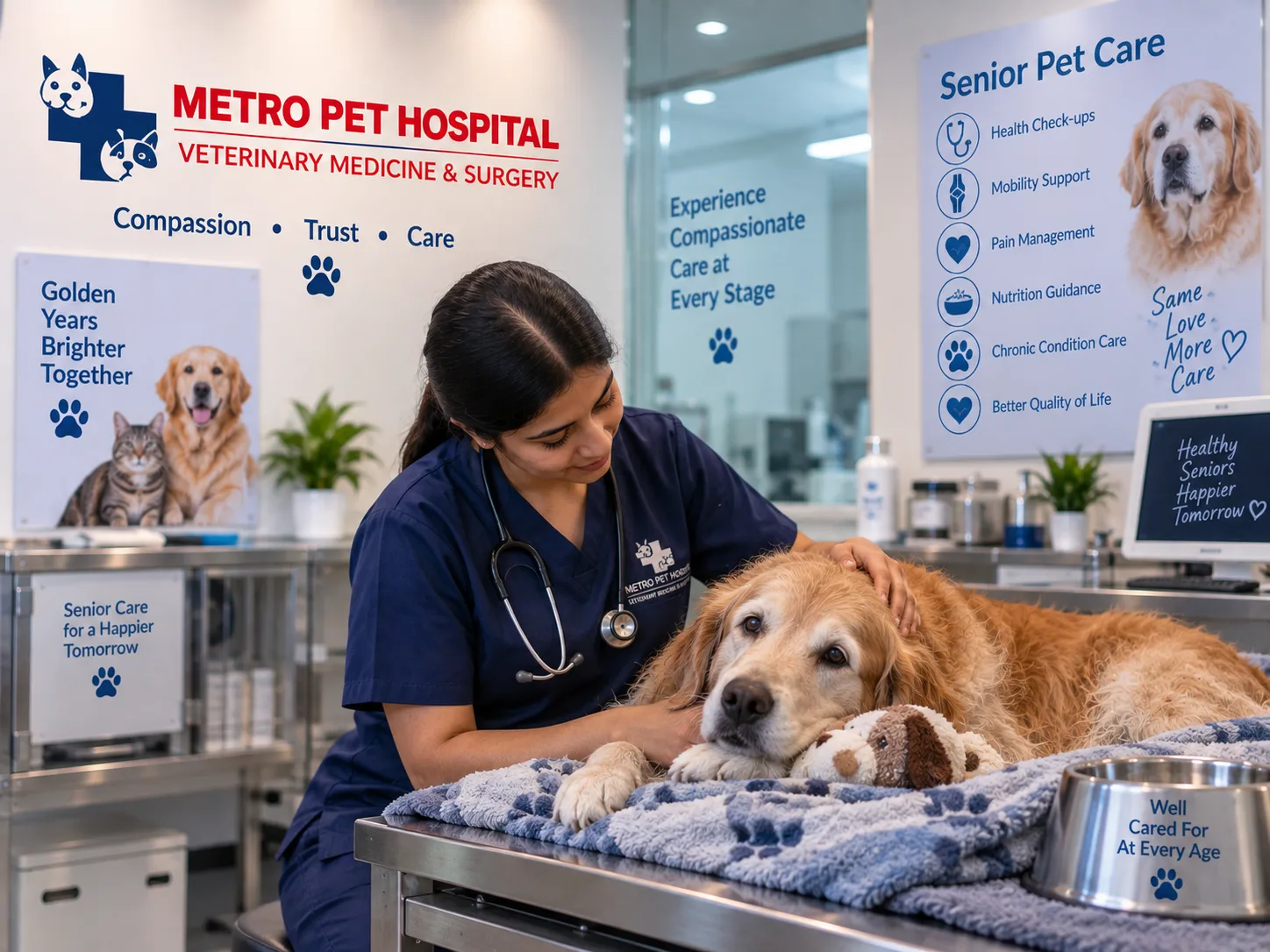
As pets age, their healthcare needs can change. Our senior pet care service focuses on regular health assessments, early identification of age-related concerns, mobility support, nutrition guidance and comfortable ageing for dogs and cats.

service 15

Compassionate Care for Senior Pets

Senior pets deserve attentive healthcare that supports their comfort, mobility and quality of life. Regular veterinary assessments can help identify age-related changes early and guide appropriate care.

Our senior pet care approach includes monitoring overall health, discussing changes in behaviour or activity, assessing mobility and providing practical guidance for ongoing home care.

Supporting Healthy Ageing

Every senior pet ages differently. Veterinary recommendations are tailored according to the pet's age, breed, lifestyle, medical history and individual needs.

Conditions & concerns covered

Age-related changes in activity and behaviour Reduced mobility or stiffness Joint and mobility concerns Changes in appetite or weight Dental and oral health concerns Changes in vision or hearing Chronic health conditions requiring monitoring Senior-pet nutrition and weight management General age-related health changes

When to contact a veterinarian

Contact a veterinarian if your senior pet shows a noticeable change in appetite, weight, activity, mobility, behaviour or daily routine. Veterinary attention is also recommended for persistent vomiting, diarrhoea, breathing difficulties, pain, weakness, unusual thirst or urination, or other changes that concern you.

What to expect

  1. Step 1

    Senior pet health history and lifestyle assessment

  2. Step 2

    Physical examination and age-related health assessment

  3. Step 3

    Review of mobility, weight, appetite and behaviour

  4. Step 4

    Assessment of ongoing or chronic health concerns

  5. Step 5

    Discussion of nutrition, exercise and home-care needs

  6. Step 6

    Recommended diagnostic tests or follow-up when appropriate

  7. Step 7

    Personalized senior-care plan and monitoring guidance

Facilities

  • Veterinary consultation and examination facilities
  • Diagnostic and blood-testing support
  • Digital X-ray and imaging support
  • Dental care and oral health assessment
  • Surgical and post-operative care support
  • Inpatient and medical boarding support
  • Veterinary physiotherapy and mobility support

Benefits

  • Early identification of age-related health concerns
  • Better monitoring of ongoing health conditions
  • Support for mobility and physical comfort
  • Personalized nutrition and weight-management guidance
  • Improved senior-pet quality of life
  • Practical guidance for home care
  • Regular monitoring to support healthy ageing

Safety information

Senior pets may develop health changes gradually, so regular veterinary assessments are important. Do not give human medicines or supplements to your pet unless specifically advised by a veterinarian. Seek veterinary attention promptly if your pet experiences severe pain, difficulty breathing, collapse, seizures, inability to stand, persistent vomiting or other sudden or serious changes.

Where this service is available

Metro Pet Hospital - Sector 23, Gurugram

SCO-18, HUDA Market, Sector 23, Sector 23, Gurugram

Branch details β†’

Metro Pet Hospital - Sector 99, Gurugram

Shop G-190, Ocus Medley, Sector 99, Gurugram

Branch details β†’

Metro Pet Hospital - DLF Phase IV, Gurugram

D-02, Supermart-II, DLF Phase-IV, Gurugram

Branch details β†’

Questions about senior pet care

When is a pet considered a senior pet?
The age at which a pet is considered senior varies by species, breed and individual health. Larger dogs may enter their senior years earlier than smaller dogs, while cats generally become senior as they get older. Your veterinarian can help determine an appropriate senior-care schedule for your pet.
How often should a senior pet have a veterinary check-up?
Senior pets may benefit from more frequent veterinary assessments than younger pets. The appropriate schedule depends on your pet's age, health history, lifestyle and any ongoing medical conditions.
What signs should I watch for in an ageing pet?
Watch for changes in appetite, weight, activity, mobility, sleep, behaviour, drinking, urination or daily habits. Persistent or sudden changes should be discussed with a veterinarian.
Can senior pets benefit from physiotherapy and mobility support?
Some senior pets may benefit from veterinary physiotherapy and mobility support, particularly when stiffness or reduced mobility affects their daily activities. Your veterinarian can assess your pet and recommend suitable options.

Book Senior Pet Care

Request an appointment and our team will contact you to confirm a time.

Request a Consultation