
🐾 Pet care service

General & Soft-Tissue Surgery for Pets

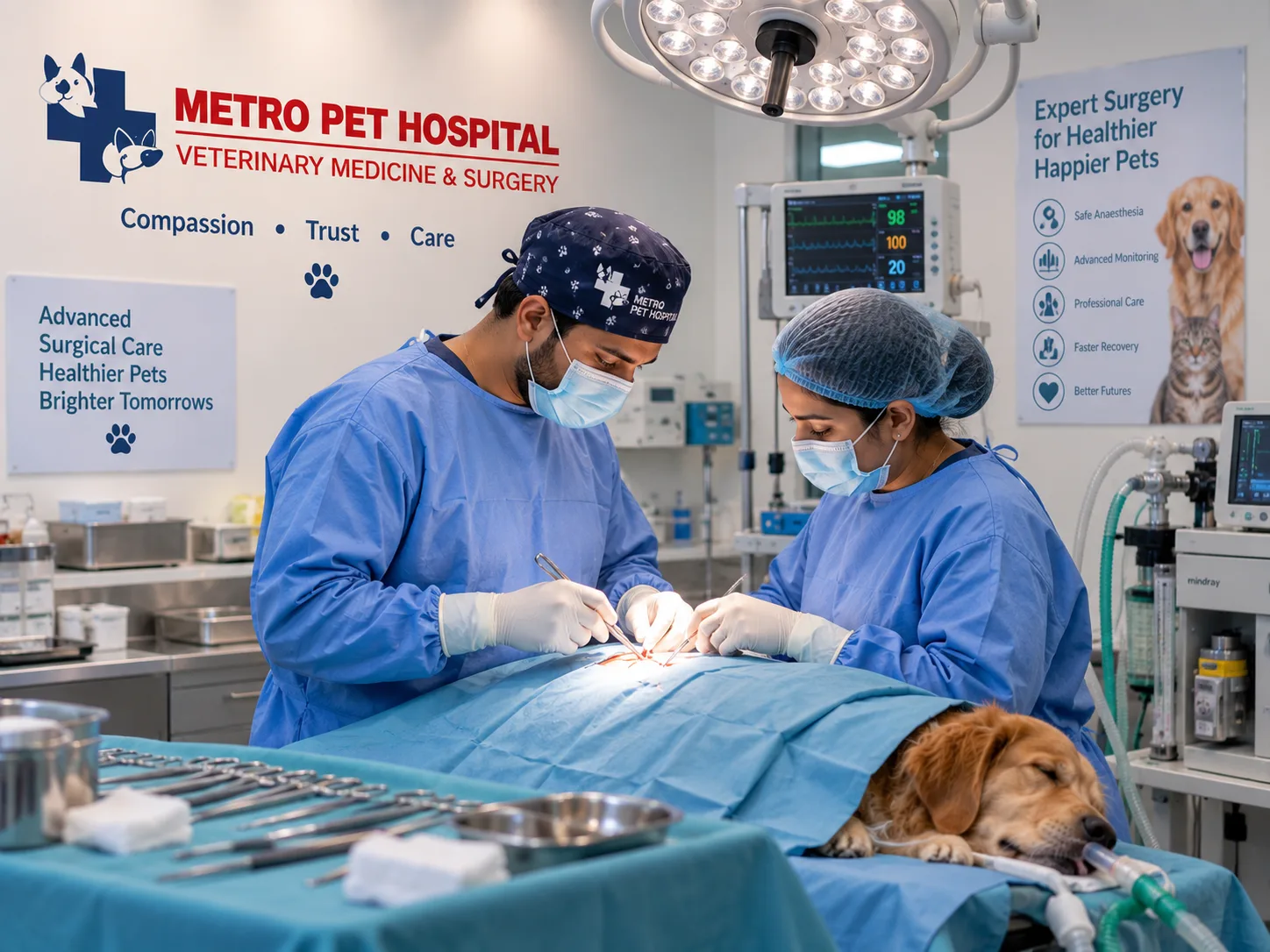
Our general and soft-tissue surgery service provides veterinary surgical care for dogs and cats when a procedure is required to treat an injury, disease or other medical condition. Each case is assessed individually, with appropriate preparation, monitoring and post-operative care.

service 7

General and soft-tissue surgery covers a range of veterinary procedures involving the skin, muscles, abdominal organs and other soft tissues. Surgery may be recommended to treat disease, injury, wounds, growths or conditions that cannot be appropriately managed with medical treatment alone.

Before surgery, our veterinary team evaluates your pet's condition and medical history to determine the appropriate approach. Diagnostic tests may be recommended when necessary to support surgical planning and assess your pet's overall health.

After the procedure, your pet receives appropriate recovery guidance and post-operative care instructions. Our team can also advise you on wound care, medication, activity restrictions and follow-up examinations.

Conditions & concerns covered

Soft-tissue injuries and wounds Skin and subcutaneous masses Abscesses and infected tissue Selected abdominal conditions requiring surgery Foreign body-related conditions requiring surgical removal Certain gastrointestinal surgical conditions Selected reproductive and related surgical procedures Wound repair and tissue reconstruction Surgical treatment of conditions not responding to medical management Other soft-tissue conditions requiring veterinary surgery

When to contact a veterinarian

Contact a veterinarian if your pet has a severe or infected wound, persistent swelling, an abnormal lump, unexplained abdominal discomfort, repeated vomiting, difficulty eating or other symptoms that may require surgical evaluation. Seek prompt veterinary attention for significant bleeding, severe pain, collapse or other serious symptoms.

What to expect

  1. Step 1

    Initial veterinary examination and medical history review

  2. Step 2

    Diagnostic assessment when clinically required

  3. Step 3

    Discussion of the recommended surgical procedure

  4. Step 4

    Pre-operative health and anaesthesia assessment

  5. Step 5

    Surgical preparation and appropriate monitoring

  6. Step 6

    Veterinary surgical procedure

  7. Step 7

    Post-operative recovery and monitoring

  8. Step 8

    Discharge instructions and medication guidance

  9. Step 9

    Follow-up examination and recovery assessment

Facilities

  • Dedicated veterinary surgical area
  • Surgical instruments and equipment
  • Pre-operative assessment facilities
  • Anaesthesia and patient monitoring
  • Post-operative recovery area
  • Clean and controlled clinical environment
  • Veterinary-supervised surgical care

Benefits

  • Professional veterinary surgical assessment
  • Individualised treatment planning
  • Appropriate patient monitoring during procedures
  • Treatment of selected soft-tissue conditions
  • Support for wound and tissue repair
  • Structured post-operative care
  • Follow-up guidance for recovery

Safety information

Surgery and anaesthesia carry potential risks, which vary according to the procedure and your pet's health. Your veterinarian will assess your pet before surgery and discuss appropriate diagnostic tests, anaesthesia considerations and potential risks. Follow all pre-operative instructions carefully and provide complete information about your pet's medical history, medications and previous reactions to anaesthesia.

Where this service is available

Metro Pet Hospital - Sector 23, Gurugram

SCO-18, HUDA Market, Sector 23, Sector 23, Gurugram

Branch details β†’

Metro Pet Hospital - Sector 99, Gurugram

Shop G-190, Ocus Medley, Sector 99, Gurugram

Branch details β†’

Metro Pet Hospital - DLF Phase IV, Gurugram

D-02, Supermart-II, DLF Phase-IV, Gurugram

Branch details β†’

Questions about general & soft-tissue surgery

What is soft-tissue surgery for pets?
Soft-tissue surgery involves veterinary procedures involving areas such as the skin, muscles, abdominal organs and other non-bony tissues. It may be recommended for certain diseases, injuries, wounds, growths or other conditions.
When might my pet need surgery?
Surgery may be recommended when a condition cannot be appropriately managed with medical treatment alone, or when surgical treatment is needed for an injury, wound, growth, foreign body or other diagnosed condition.
Most surgical procedures require anaesthesia so that the procedure can be performed safely and comfortably. The veterinarian will assess your pet and determine the appropriate anaesthetic approach for the planned procedure.
What happens after my pet's surgery?
After surgery, your pet is monitored during recovery and you will receive instructions regarding medications, wound care, feeding, activity restrictions and follow-up. Recovery requirements vary depending on the procedure and your pet's condition.

Book General & Soft-Tissue Surgery

Request an appointment and our team will contact you to confirm a time.

Request a Consultation