
🐾 Pet care service

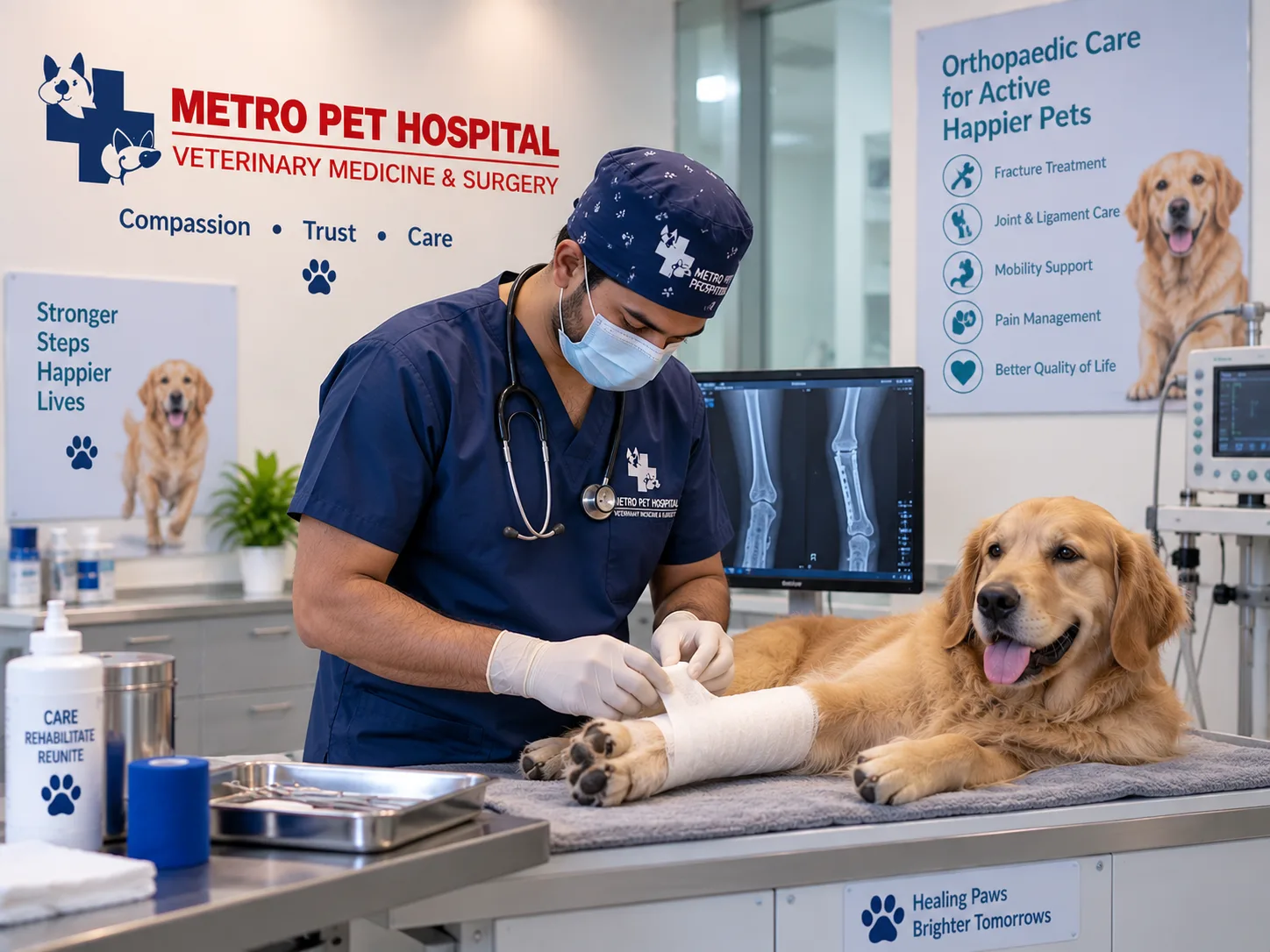
Orthopaedic assessment and treatment for fractures, joint problems, injuries and mobility-related conditions in pets.

Our orthopaedic service focuses on diagnosing and treating conditions that affect your pet's bones, joints, muscles and mobility. We assess injuries and movement problems carefully and recommend appropriate treatment based on your pet's condition, age and overall health.

service 8

Orthopaedic problems can affect a pet's comfort, movement and quality of life. At Metro Pet Hospital, our veterinary team evaluates mobility concerns, injuries and musculoskeletal conditions to help determine the most appropriate course of care.

Depending on the condition, treatment may include medical management, supportive care, diagnostic evaluation or surgical intervention. Each case is assessed individually with the goal of providing safe and practical care for your pet.

Orthopaedic Care for Better Mobility

From sudden injuries to ongoing joint and mobility concerns, early veterinary assessment can help identify problems and guide appropriate treatment. Our team works with pet parents to explain the condition, available options and recommended follow-up care.

Conditions & concerns covered

Fractures and bone injuries Joint pain and mobility problems Limping and difficulty walking Soft-tissue and musculoskeletal injuries Joint and ligament-related conditions Trauma-related orthopaedic injuries Age-related mobility concerns Post-operative orthopaedic recovery

When to contact a veterinarian

Contact a veterinarian if your pet suddenly starts limping, has difficulty standing or walking, appears painful when moving, develops swelling around a limb or joint, or has suffered an accident or other significant injury. Prompt assessment is particularly important when your pet cannot put weight on a limb or appears to be in severe pain.

What to expect

  1. Step 1

    Initial physical and orthopaedic examination

  2. Step 2

    Assessment of gait, movement and affected area

  3. Step 3

    Review of medical history and previous injuries

  4. Step 4

    Diagnostic evaluation when required

  5. Step 5

    Discussion of treatment options with the pet parent

  6. Step 6

    Orthopaedic procedure or medical treatment when indicated

  7. Step 7

    Post-treatment monitoring and recovery guidance

  8. Step 8

    Follow-up assessment as recommended

Facilities

  • Veterinary consultation and examination area
  • Diagnostic support for orthopaedic assessment
  • Surgical facilities when a procedure is indicated
  • Patient monitoring and supportive care
  • Post-operative recovery area
  • Veterinary team support for follow-up care

Benefits

  • Early assessment of mobility and injury concerns
  • Individualised treatment planning
  • Professional evaluation of bone and joint problems
  • Support for pain management and recovery
  • Guidance for post-operative rehabilitation
  • Improved comfort and mobility
  • Ongoing veterinary follow-up when required

Safety information

Keep your pet's activity restricted after an injury until veterinary assessment. Do not attempt to straighten, manipulate or massage a suspected fracture or injured joint. Avoid giving human pain medicines unless specifically prescribed by a veterinarian. Follow all activity, medication and post-operative instructions provided by the veterinary team.

Where this service is available

Metro Pet Hospital - Sector 23, Gurugram

SCO-18, HUDA Market, Sector 23, Sector 23, Gurugram

Branch details β†’

Metro Pet Hospital - Sector 99, Gurugram

Shop G-190, Ocus Medley, Sector 99, Gurugram

Branch details β†’

Metro Pet Hospital - DLF Phase IV, Gurugram

D-02, Supermart-II, DLF Phase-IV, Gurugram

Branch details β†’

Questions about orthopaedic procedures

What orthopaedic problems can affect dogs and cats?
Pets may develop fractures, joint problems, ligament injuries, mobility issues, limping and other musculoskeletal conditions. A veterinary examination helps determine the cause and appropriate treatment.
When should I take my pet to a veterinarian for limping?
Veterinary assessment is recommended if limping is sudden, persistent, worsening, associated with pain or swelling, or if your pet is unable to put weight on the affected limb.
Will my pet need surgery for an orthopaedic problem?
Not every orthopaedic condition requires surgery. Treatment depends on the type and severity of the problem, your pet's overall health and the veterinary assessment. Your veterinarian will discuss the appropriate options with you.
How can I help my pet recover after an orthopaedic procedure?
Follow the veterinarian's instructions regarding medication, activity restriction, wound care, exercise and follow-up visits. Preventing excessive activity during recovery can be important for proper healing.

Book Orthopaedic Procedures

Request an appointment and our team will contact you to confirm a time.

Request a Consultation