
🐾 Pet care service

Emergency & Critical Care for Pets

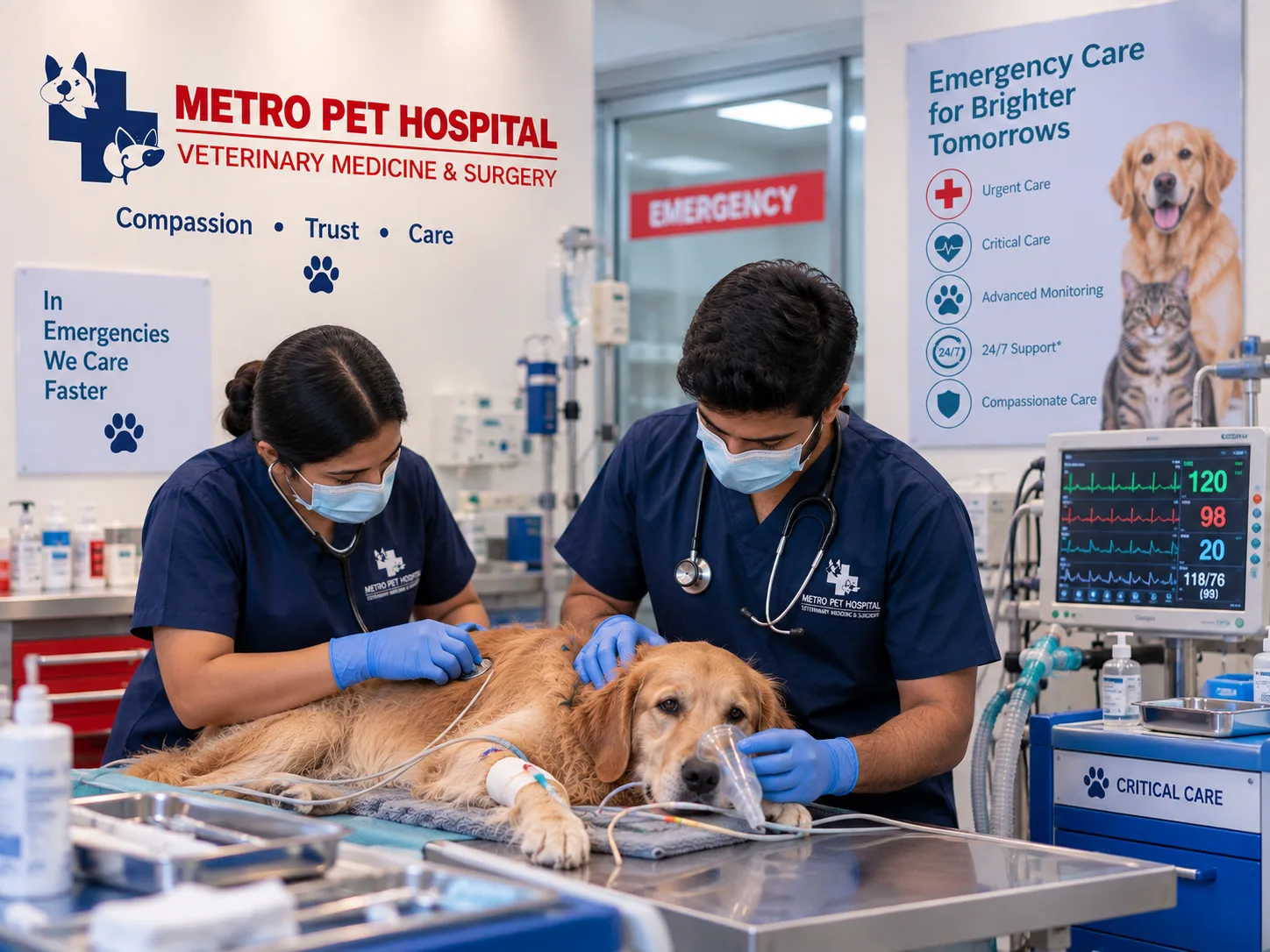
When a pet becomes suddenly unwell or experiences an injury, timely veterinary assessment is important. Our emergency and critical care service focuses on prompt evaluation, stabilisation and supportive treatment for pets with urgent health concerns.

service 10

Emergencies can happen unexpectedly, and pets with serious illness or injury may require prompt veterinary attention. At Metro Pet Hospital, our emergency and critical care service is focused on assessing urgent conditions and providing appropriate stabilisation and supportive treatment.

Our veterinary team evaluates your pet's symptoms, vital signs and overall condition to determine the urgency of the situation and the next appropriate steps. Diagnostic tests and supportive care may be recommended depending on your pet's individual needs.

Prompt Veterinary Care When Your Pet Needs It

If your pet is showing severe or rapidly worsening symptoms, contact the veterinary team promptly for guidance. Early assessment can help identify serious conditions and determine the appropriate course of care.

Conditions & concerns covered

Sudden illness or rapidly worsening symptoms Breathing difficulties Severe weakness or collapse Serious injuries and trauma Uncontrolled bleeding Severe vomiting or diarrhoea Suspected poisoning or toxin exposure Seizures or altered consciousness Severe pain or distress Dehydration and acute health concerns

When to contact a veterinarian

Seek prompt veterinary attention if your pet has difficulty breathing, collapses, experiences repeated seizures, has uncontrolled bleeding, suffers a significant injury, shows severe pain or weakness, has suspected poisoning or develops rapidly worsening symptoms. If you are unsure whether your pet's condition is an emergency, contact the veterinary team for guidance.

What to expect

  1. Step 1

    Initial emergency assessment

  2. Step 2

    Evaluation of vital signs and overall condition

  3. Step 3

    Rapid identification of urgent concerns

  4. Step 4

    Stabilisation and supportive care when required

  5. Step 5

    Diagnostic testing when appropriate

  6. Step 6

    Veterinary treatment based on clinical findings

  7. Step 7

    Monitoring of response to treatment

  8. Step 8

    Discussion of ongoing care and follow-up

Facilities

  • Emergency assessment area
  • Patient monitoring equipment
  • Diagnostic support
  • Oxygen and supportive-care equipment when available
  • Intravenous fluid therapy support
  • Veterinary treatment and procedure facilities
  • Patient observation and recovery area

Benefits

  • Prompt assessment of urgent health concerns
  • Early identification of potentially serious conditions
  • Professional stabilisation and supportive care
  • Veterinary monitoring during critical situations
  • Appropriate diagnostic evaluation
  • Individualised treatment planning
  • Clear guidance for follow-up care

Safety information

If your pet is experiencing a serious or rapidly worsening condition, contact a veterinarian promptly. Keep your pet calm and minimise unnecessary movement, particularly after trauma. Do not give human medicines unless specifically instructed by a veterinarian. In suspected poisoning cases, do not induce vomiting unless directed by a veterinary professional. Contact the hospital before travelling when possible so the team can advise you on the next steps.

Where this service is available

Metro Pet Hospital - Sector 23, Gurugram

SCO-18, HUDA Market, Sector 23, Sector 23, Gurugram

Branch details β†’

Metro Pet Hospital - Sector 99, Gurugram

Shop G-190, Ocus Medley, Sector 99, Gurugram

Branch details β†’

Metro Pet Hospital - DLF Phase IV, Gurugram

D-02, Supermart-II, DLF Phase-IV, Gurugram

Branch details β†’

Questions about emergency & critical care

What situations require emergency veterinary care?
Difficulty breathing, collapse, uncontrolled bleeding, severe injury, repeated seizures, suspected poisoning, severe pain and rapidly worsening symptoms may require prompt veterinary attention. If you are unsure, contact a veterinarian for guidance.
What should I do if my pet is injured?
Keep your pet calm and minimise movement, especially if there may be a serious injury. Contact a veterinarian promptly for advice and arrange an examination as soon as possible.
What should I do if I suspect my pet has been poisoned?
Contact a veterinarian immediately and provide information about the substance involved if known. Do not induce vomiting or give home remedies unless specifically instructed by a veterinary professional.
Should I call the hospital before bringing my pet for emergency care?
When possible, contacting the hospital before travelling can help the veterinary team understand the situation and advise you on the appropriate next steps. In a severe emergency, seek veterinary attention without unnecessary delay.

Book Emergency & Critical Care

Request an appointment and our team will contact you to confirm a time.

Request a Consultation